AWS Networking for DevOps Engineers: VPC Deep Dive 🌐☁️
Tech enthusiast | Code craftsman | DevOps explorer | Turning bugs into features one line at a time 🚀
If there’s one AWS topic that separates beginners from real DevOps engineers, it’s networking.
You can write CI/CD pipelines and deploy containers—but without solid VPC knowledge, production systems will break.
In this blog, we’ll do a deep, DevOps-focused dive into AWS networking, centered around VPC, with real-world use cases and interview relevance.
What Is a VPC in AWS?
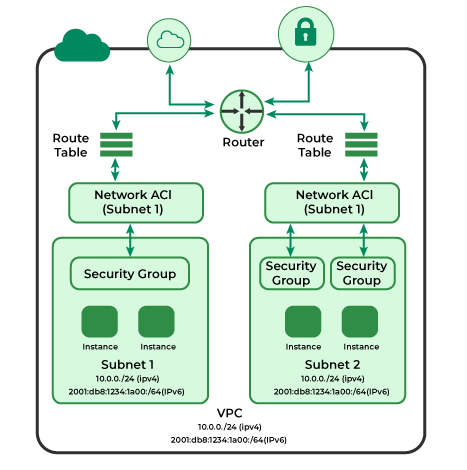
A Amazon VPC (Virtual Private Cloud) is your own isolated network inside AWS where you launch resources like EC2, ECS, and RDS.
Think of VPC as:
Your personal data center inside the AWS cloud.
DevOps engineers design, secure, and automate VPCs—not just use them.
Why VPC Is Critical for DevOps Engineers
DevOps engineers use VPC to:
Isolate environments (dev / staging / prod)
Secure applications from public exposure
Control inbound & outbound traffic
Design high-availability architectures
Meet compliance & security requirements
⚠️ Most production outages are networking-related, not code-related.
Core Components of AWS VPC (DevOps View)
1️⃣ Subnets (Public & Private)
Subnets divide a VPC into smaller networks.
Public Subnet
Internet access
Load balancers, bastion hosts
Private Subnet
No direct internet access
App servers, databases, containers
💡 Best Practice:
Apps & databases should live in private subnets.
2️⃣ Internet Gateway (IGW)
An Internet Gateway enables communication between your VPC and the internet.
Used by:
Public EC2 instances
Load balancers
NAT Gateways
Without IGW → No public internet traffic.
3️⃣ Route Tables
Route tables define where traffic goes.
Example:
0.0.0.0/0 → Internet Gateway(public subnet)0.0.0.0/0 → NAT Gateway(private subnet)
DevOps engineers must understand traffic flow, not just configuration.
4️⃣ NAT Gateway (Private Internet Access)
A NAT Gateway allows private instances to:
Download updates
Pull Docker images
Access APIs
…but blocks inbound internet traffic.
🔐 Essential for secure production systems.
Security in AWS Networking 🔐
5️⃣ Security Groups (SG)
Security Groups act as virtual firewalls for resources.
Characteristics:
Stateful
Resource-level security
Allow rules only
DevOps usage:
Allow HTTP/HTTPS to ALB
Allow app traffic from ALB to EC2
Restrict SSH access
6️⃣ Network ACLs (NACLs)
Network ACLs operate at the subnet level.
Characteristics:
Stateless
Allow & deny rules
Broad network control
💡 DevOps engineers use:
SGs for fine-grained security
NACLs for extra protection layers
High Availability & Multi-AZ Design
AWS networking supports Multi–Availability Zone architectures.
DevOps best practice:
Create subnets in multiple AZs
Deploy EC2/ECS across AZs
Use Load Balancers to distribute traffic
Result:
Fault tolerance
Zero downtime deployments
Production-grade reliability
⚙️ High availability starts with networking.
VPC in Real DevOps Projects
Typical DevOps architecture:
VPC
Public subnet → Load Balancer
Private subnet → App containers (ECS/EKS)
Private subnet → Databases
IAM + Security Groups + NACLs
Every CI/CD deployment eventually lands inside a VPC.
VPC + Infrastructure as Code (IaC)
DevOps engineers never create VPCs manually in production.
They use:
Terraform
AWS CloudFormation
Benefits:
Version-controlled networking
Repeatable environments
Faster recovery
Fewer human errors
📜 Networking as Code is mandatory in modern DevOps.
Interview Perspective 🎯
Common DevOps interview questions:
Difference between public and private subnet?
How does NAT Gateway work?
Security Group vs NACL?
How do you design a secure VPC?
How do containers communicate inside a VPC?
👉 Mastering VPC gives you confident, structured answers.
🔚 Conclusion
AWS VPC is not just networking—it’s the foundation of every cloud-based DevOps system.
CI/CD pipelines
Containers
Microservices
Databases
Monitoring
Security
All of them depend on correct VPC design.
Great DevOps engineers automate deployments.
Elite DevOps engineers design networks that never fail.


